
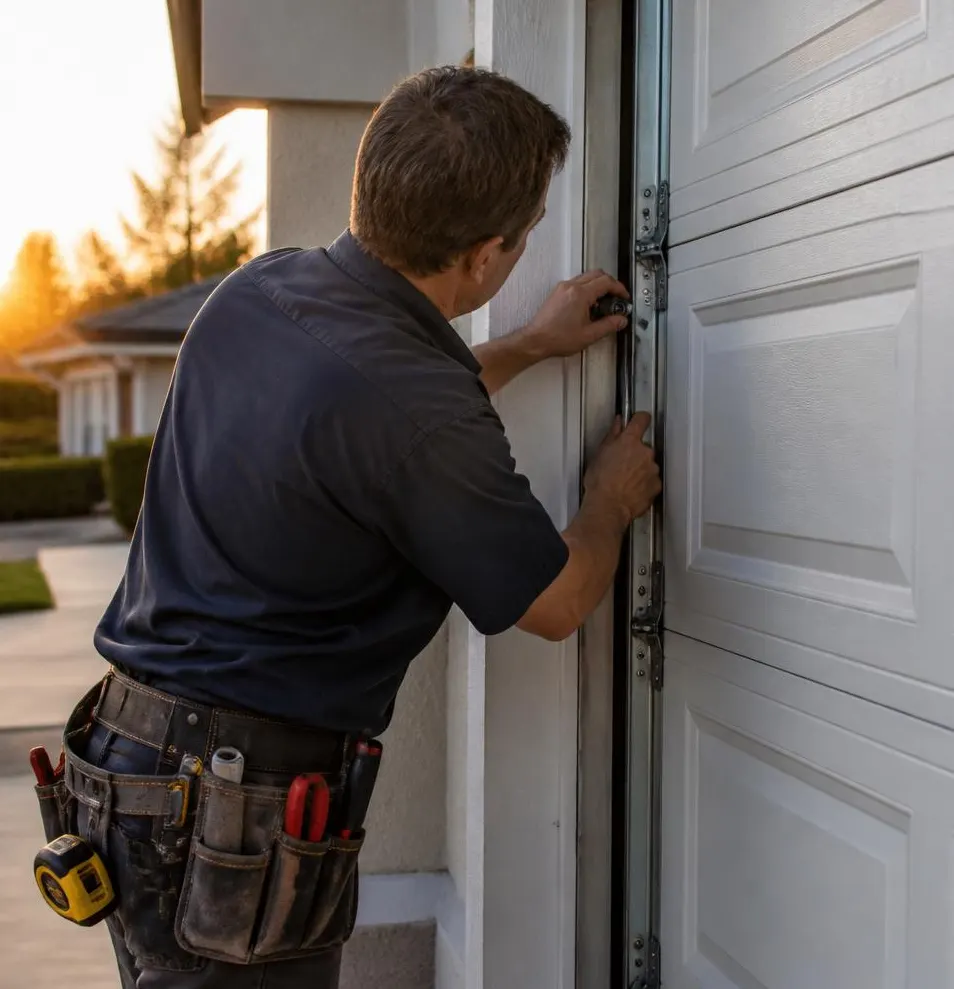
Here's the argument almost every homeowner has had at least once: the garage door won't close all the way, or it reverses for no obvious reason, and someone grabs the opener manual (or just starts pressing buttons on the motor unit) and cranks up the force setting. The door closes. Problem solved, right?
It's a tempting fix because it's fast, it requires no tools, and it works immediately. But turning up the force doesn't fix whatever was making the door hard to close in the first place. It just makes the opener strong enough to muscle through the resistance. That's how you end up with an opener that can crush a bike, a trash can, or worse, and a door that's quietly wearing itself out every time it runs.
What Force and Travel Limits Actually Do
Every garage door opener has two separate settings that control how it behaves, and they're often confused for each other:
- Travel limits tell the opener exactly where "fully open" and "fully closed" are. They control how far the door moves before the motor stops on its own.
- Force settings tell the opener how much resistance it's allowed to push through before it assumes something is wrong and reverses or stops.
When these are set correctly, the door travels smoothly to the right spot and stops gently. When they're off, you get one of two problems: a door that doesn't fully close or open (bad travel limits), or a door that either reverses too easily or doesn't reverse when it should (bad force settings).
Why the Wrong Force Setting Is the Dangerous One
Travel limit problems are annoying. Force problems are the ones that cause real damage.
If a door is hard to move because of weak springs, a bent track, dry or worn rollers, or binding hardware, the correct fix is to repair whatever is causing the resistance. Turning up the force instead means the opener now has enough muscle to drag the door through that resistance anyway. A few things happen from there:
- The motor works harder on every single cycle, which shortens its life significantly.
- The opener's auto-reverse safety feature becomes less reliable, because the force threshold needed to trigger a stop is now much higher. That matters a lot if a pet, a cord, or a person's foot is in the door's path.
- The door itself takes more stress with every open and close, which can crack panels, loosen the track, or strip gears faster than normal wear would.
This is especially worth paying attention to in homes with torsion springs doing most of the lifting work. If the springs are tired or mismatched to the door's weight, the opener is compensating for a mechanical problem with raw force. That's backwards. The opener should be doing the easy job of moving a properly balanced door, not hauling a heavy one.
How to Tell If Yours Is Set Wrong
A few quick checks will tell you where you stand:
- Disconnect the opener and lift the door by hand. It should move smoothly and stay put when lifted about halfway. If it's heavy, drops on its own, or feels like it's fighting you, that's a spring or balance problem, not an opener setting problem.
- Run the auto-reverse test. Lay a 2x4 flat on the ground where the door closes. The door should reverse the moment it touches the wood. If it keeps pushing down on it, the force is set too high and needs to come down immediately.
- Listen to the motor. A strained, laboring sound during travel usually means the opener is working harder than it should, which points back to force compensating for a mechanical issue.
- Watch where the door actually stops. If it consistently stops a few inches short of the floor or doesn't seat fully against the frame, that's a travel limit adjustment, not a force issue.
A Seasonal Wrinkle Worth Knowing
As the weather shifts into the rainy season here, a lot of homeowners notice their door's behavior changes slightly from how it ran during the dry summer months. Metal track and hardware contract a bit in cooler, damp mornings, and a door that seemed fine in August can suddenly feel stiffer once temperatures drop and humidity rises. If you cranked the force up over the summer to deal with dust buildup or a dry track, don't assume that's still the right setting once the weather turns. Lubricating the rollers, hinges, and track and re-checking balance is a better fix than leaving the force higher than it needs to be.
When to Call Carmichael Garage Door
If your door needs more force than it should, or the travel limits never seem to hold their adjustment, that's usually a sign of an underlying mechanical issue rather than a settings problem. Our technicians check spring tension, track alignment, and roller condition as part of a standard garage door maintenance visit, and we reset force and travel limits to match the door's actual condition, not just mask what's wrong with it. If worn springs turn out to be the real culprit, we handle spring replacement on the spot so the opener goes back to doing its job the way it was designed to.
If your garage door in Carmichael, CA is fighting its opener, don't just turn up the force and call it settled. Give Carmichael Garage Door a call and we'll find out what's actually causing the resistance.