
Your Garage Door Springs Are Doing More Work Than You Think
If you've ever tried to lift a garage door manually when the power was out, you already know how heavy these doors are. A standard residential garage door can weigh anywhere from 130 to 350 pounds depending on the material and size. The reason it glides up and down so effortlessly every day? Your garage door springs.
Springs are the unsung heroes of your garage door system. They counterbalance the weight of the door, making it possible for your opener — or your own arms — to lift it with minimal effort. But like any mechanical component under constant tension, springs wear out over time. And when they fail, your garage door becomes inoperable or even dangerous.
For homeowners in Carmichael and surrounding areas, understanding the lifespan of your garage door springs and recognizing the warning signs of failure can save you from unexpected breakdowns, costly emergency repairs, and potential safety hazards.
How Long Do Garage Door Springs Typically Last?
The lifespan of garage door springs is measured in cycles. One cycle equals one full open-and-close of the door. Most standard torsion springs are rated for approximately 10,000 cycles, while high-cycle springs can be rated for 25,000 or even 50,000 cycles.
So how does that translate to years? It depends on how often you use your garage door:
- 2 cycles per day (once out, once in): A standard spring lasts roughly 13-14 years
- 4 cycles per day (typical for families): A standard spring lasts roughly 7 years
- 6-8 cycles per day (busy households, home businesses): A standard spring may last only 3-5 years
Many Carmichael homeowners use their garage door as their primary entry point, which means those springs are working hard every single day. If your home is 8-10 years old and you've never had the springs replaced, it's worth having them inspected.
Torsion Springs vs. Extension Springs
There are two main types of garage door springs, and they wear differently:
Torsion Springs
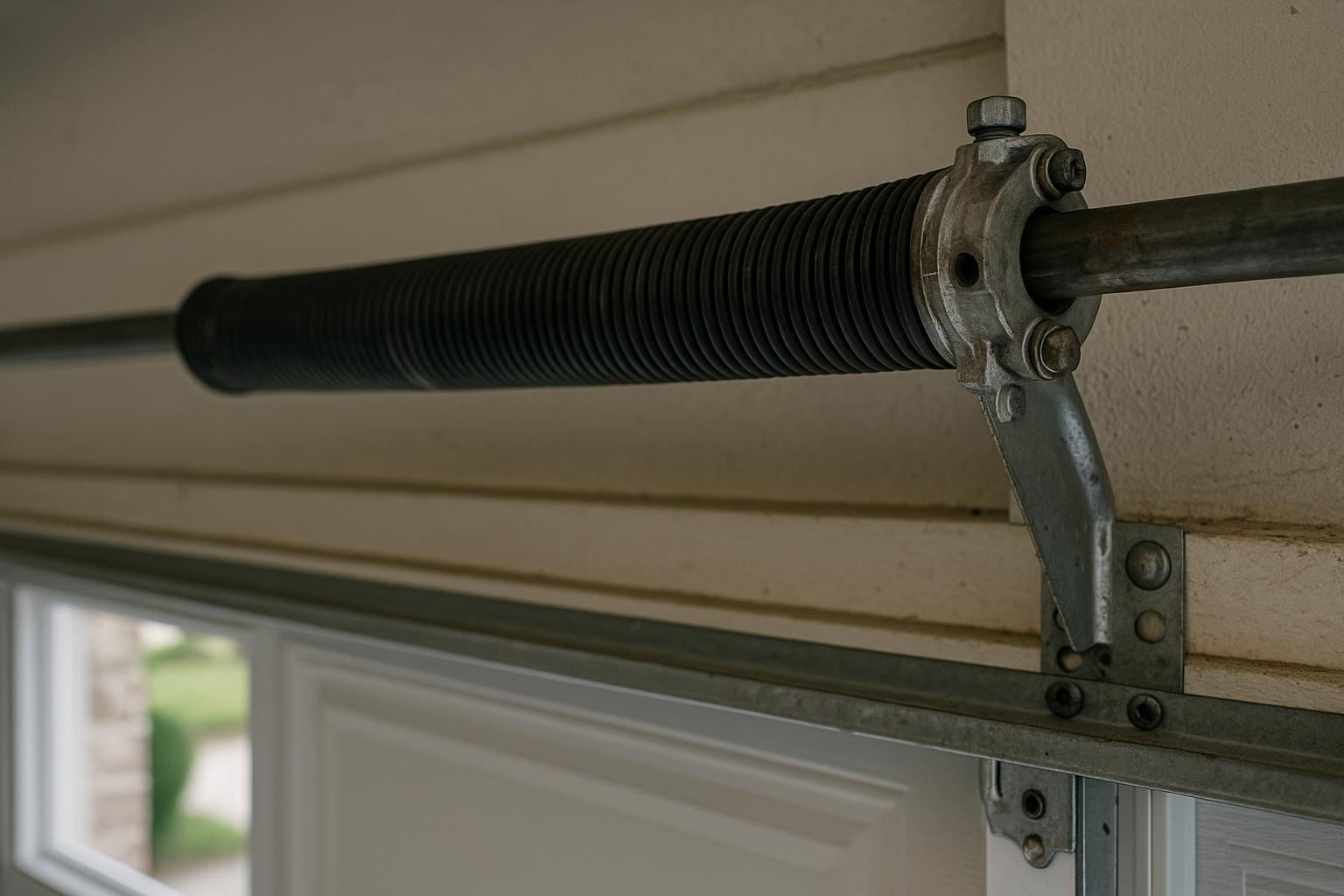
These are mounted horizontally above the garage door opening. They use torque to lift the door and are the more common type in modern installations. Torsion springs tend to last longer, operate more smoothly, and are generally considered safer. However, they store an enormous amount of energy and should never be replaced by anyone other than a trained professional.
Extension Springs
These run along the horizontal tracks on either side of the door. They stretch and contract to provide lifting force. Extension springs are typically found on older or lighter doors. They have a shorter lifespan than torsion springs and can be more dangerous when they break because they can snap and fly across the garage if safety cables aren't installed.
If your home in Carmichael or Fair Oaks still has extension springs without safety cables, we strongly recommend having a technician add them or upgrade your system to torsion springs.
Warning Signs Your Springs Are Wearing Out
Springs rarely fail without some advance warning. Here are the signs to watch for:
- The door feels heavier than usual: If your garage door seems sluggish or your opener is straining to lift it, the springs may be losing tension.
- The door doesn't stay open: A properly balanced door should stay in place when lifted halfway. If it slides down, your springs are weakening.
- Visible gaps in the spring coils: On torsion springs, look for gaps or separation between the coils. This is a clear sign the spring is stretched out and nearing failure.
- Loud bang from the garage: If you heard a loud bang — almost like a gunshot — coming from your garage, a spring likely already broke. This is the sound of the coiled metal releasing its stored energy.
- The door opens unevenly: If one side of the door lifts higher than the other, one spring may have broken or weakened more than the other.
- Rust on the springs: Rust increases friction on the coils and accelerates wear. Sacramento Valley humidity, morning fog, and temperature swings throughout the year can contribute to corrosion on springs in Carmichael-area garages.
Can You Replace Garage Door Springs Yourself?
We understand the DIY spirit — and there are plenty of garage door maintenance tasks homeowners can safely handle. Spring replacement is not one of them.
Garage door springs are under extreme tension. A torsion spring on a standard two-car garage door can hold the equivalent of several hundred pounds of force. If improperly handled, a spring can cause severe injury or even death. Every year, thousands of people across the country are injured attempting DIY spring replacements.
Professional technicians have the specialized tools, training, and experience to replace springs safely and correctly. They'll also ensure the springs are properly calibrated to your door's weight, which is critical for smooth operation and the longevity of your new springs.
What to Expect During a Professional Spring Replacement
When you call a garage door company for spring replacement, here's what a typical service visit looks like:
- Inspection: The technician inspects the entire door system — not just the springs — to identify any additional issues.
- Spring removal: The old springs are carefully unwound and removed using professional winding bars.
- New spring installation: New springs matched to your door's weight and size are installed and wound to the correct tension.
- Balance testing: The door is tested for proper balance, ensuring it opens, closes, and holds position correctly.
- Lubrication and adjustment: Hinges, rollers, and other hardware are lubricated and adjusted as needed.
The entire process usually takes about an hour for a standard residential door. At Carmichael Garage Door, we carry common spring sizes on our trucks so most replacements can be completed in a single visit.
How to Extend the Life of Your Springs
While springs will eventually wear out no matter what, you can maximize their lifespan with a few simple practices:
- Lubricate your springs regularly: Apply a silicone-based or white lithium grease spray to your springs every few months. This reduces friction and prevents rust.
- Schedule annual maintenance: A yearly professional tune-up catches small problems before they become big ones and keeps your entire system running smoothly.
- Minimize unnecessary cycles: Every open-and-close counts. If family members are opening the door multiple times when once would do, those extra cycles add up over the years.
- Upgrade to high-cycle springs: When it's time for replacement, consider investing in high-cycle springs. They cost more upfront but can last two to three times longer than standard springs.
Don't Wait for a Breakdown
A broken garage door spring always seems to happen at the worst possible time — when you're running late for work, loading groceries in the rain, or trying to get the kids to school. Being proactive about spring inspection and replacement helps you avoid those frustrating situations.
If your garage door springs are getting up there in age, or if you've noticed any of the warning signs mentioned above, give us a call. Carmichael Garage Door serves homeowners throughout Carmichael, Citrus Heights, Rancho Cordova, Orangevale, Fair Oaks, and Arden-Arcade with fast, honest spring replacement and repair services. We'll get your door back in safe working order — and help you avoid an emergency down the road.