
A Frustrating Problem That's More Common Than You Think
You press the button on your garage door remote, the door starts its descent, and then — right before it reaches the floor — it reverses and goes back up. You try again. Same thing. Maybe it works on the third try, or maybe it doesn't work at all.
This is one of the most common garage door complaints we hear from homeowners in Carmichael, and it's not just annoying — it can be a security risk. A door that won't fully close leaves your garage, your vehicles, and your home vulnerable. The good news is that the cause is usually identifiable and fixable. Let's walk through the most likely reasons your garage door reverses before hitting the floor and what you can do about each one.
1. Misaligned Safety Sensors
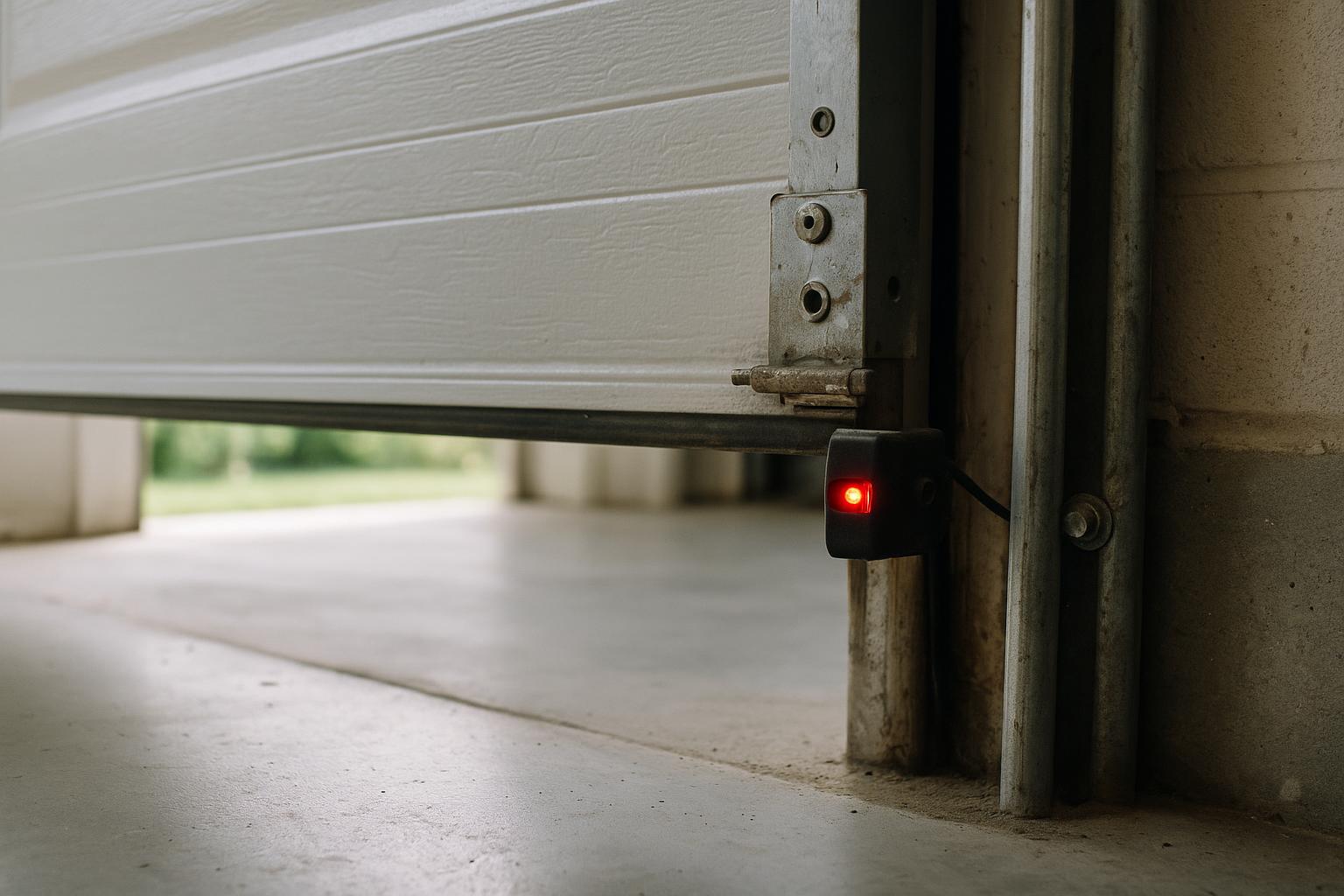
This is the number one cause of a garage door that reverses unexpectedly. Every garage door opener manufactured after 1993 is required to have photo-eye safety sensors mounted near the bottom of the door tracks on each side. These sensors send an invisible beam across the opening, and if anything breaks that beam — a pet, a child, a trash can — the door reverses to prevent injury or damage.
The problem is that these sensors can become misaligned over time. A bump from a bicycle, vibrations from daily use, or even settling of your garage foundation can knock one sensor slightly out of alignment. When the sensors can't "see" each other, the opener interprets it as an obstruction and reverses the door.
What to check:
- Look at the small LED lights on each sensor. Both should be lit — typically one green and one amber. If one is flickering or off, that sensor is likely misaligned.
- Gently adjust the sensor that's not lit until the light becomes steady.
- Make sure nothing is blocking the beam path between the two sensors, including cobwebs, dirt, or debris.
If cleaning and adjusting the sensors doesn't solve the issue, the wiring or the sensors themselves may need to be replaced.
2. Something Is Blocking the Door's Path
Before diving into more complex troubleshooting, take a careful look at the area where the door meets the ground. Sometimes the culprit is surprisingly simple — a small rock, a piece of wood, a garden tool, or even built-up leaves along the threshold. Garage floors in older Carmichael homes can also develop uneven spots or cracks that interfere with the door's seal.
Clear the area completely and try closing the door again. If the problem goes away, you've found your answer.
3. The Close-Limit Switch Needs Adjustment
Your garage door opener has limit switches that tell it how far the door should travel when opening and closing. If the close-limit switch is set incorrectly, the opener may think the door has hit something — even when it hasn't — and trigger a reversal.
What to check:
- Locate the limit adjustment screws on your opener unit (usually on the back or side of the motor housing).
- The close-limit screw controls how far the door travels downward. Small adjustments — typically a quarter turn at a time — can make a significant difference.
- Consult your opener's manual for specific instructions, as the adjustment process varies by brand and model.
Be cautious with this adjustment. Setting the limit too far can cause the door to press too hard against the floor, which creates the opposite problem — excessive force that can damage the door or the opener.
4. Worn or Damaged Rollers and Tracks
Garage door rollers guide the door along the metal tracks on each side. Over time, rollers can wear out, crack, or become clogged with debris. Tracks can also become bent, dented, or misaligned. When the door encounters resistance from any of these issues during its travel, the opener's safety mechanism may interpret it as an obstruction and reverse the door.
Inspect the rollers and tracks visually. Look for rollers that are chipped, don't spin freely, or have flat spots. Check the tracks for bends, gaps, or areas where the metal has shifted. In our experience working with homes throughout Carmichael and Fair Oaks, worn nylon rollers are one of the most overlooked maintenance items — they can degrade significantly after seven to ten years of regular use.
5. Broken or Worn Garage Door Springs
Your garage door springs do the heavy lifting — literally. They counterbalance the weight of the door so the opener doesn't have to work as hard. When a spring is weakening or broken, the door becomes much heavier for the opener to manage. The opener may start closing the door but struggle partway down, triggering a reversal.
Important: Do not attempt to repair or replace garage door springs yourself. These components are under extreme tension and can cause serious injury if handled improperly. This is always a job for a trained professional.
6. The Opener's Force Setting Is Too Low
Similar to the limit switch, your opener has a force setting that determines how much resistance the motor will push through before reversing. If this setting is too sensitive, the door may reverse from normal friction during operation.
Most openers have a force adjustment screw near the limit switches. Again, make small adjustments and test after each one. The goal is to find the setting where the door closes fully without excessive force. If you're unsure, it's better to call a technician than to risk setting the force too high, which could compromise the safety reversal feature.
7. Wiring or Logic Board Issues
If you've checked everything above and the door still reverses, the problem may be electrical. Frayed wires, corroded connections, or a failing logic board in the opener can send incorrect signals that cause erratic behavior. Rodents in garages — not uncommon in the Carmichael area — can chew through wiring and create intermittent problems that are difficult to diagnose without experience.
Electrical issues with garage door openers are best handled by a professional who can safely test circuits and identify the root cause.
When to Call a Professional
Some of the fixes above — cleaning sensors, clearing debris, minor limit adjustments — are reasonable for a handy homeowner to tackle. But if you've gone through the basics and the problem persists, or if the issue involves springs, wiring, or internal opener components, it's time to call in help.
At Carmichael Garage Door, we troubleshoot reversal issues regularly for homeowners across Carmichael, Citrus Heights, Rancho Cordova, and the surrounding area. In most cases, we can diagnose and fix the problem in a single visit. We'll also inspect the rest of your door system to catch any developing issues before they become bigger — and more expensive — problems.
Don't Ignore a Reversing Garage Door
A garage door that won't close properly isn't just inconvenient. It's a security gap and a potential safety hazard. Whether the fix is a simple sensor adjustment or a more involved repair, addressing the issue promptly protects your home and gives you peace of mind.
If your garage door is giving you trouble, give us a call. We're local, we're honest, and we'll get your door working the way it should.